


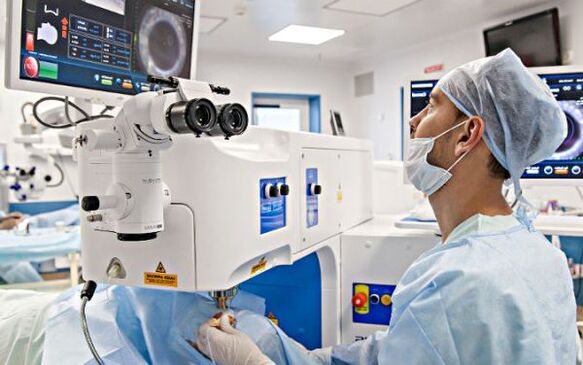
Vision correction is performed using a laser.This technique is widely used to achieve normal refraction and, accordingly, get rid of myopia, farsightedness and astigmatism.
Indications and contraindications
Laser correction using the LASIK method is the most popular and safest way to correct refractive errors.It is advisable to carry it out in the following cases:
- myopia no more than -12 D;
- farsightedness up to +6 D;
- astigmatism from -6 to +6 D.
Using a laser, you can simultaneously treat several pathologies.As a rule, the effect occurs after several procedures, but myopic astigmatism is treated in just one session.
Contraindications to laser vision correction:
- thin cornea, thickness less than 430 microns;
- the patient's age is less than 18 years or more than 40 years;
- pregnancy;
- refractive error more than 12 D;
- infectious eye lesions;
- high degree of dryness of the mucous membrane;
- chronic corneal diseases (cataracts, glaucoma, keratoconus);
- presence of a pacemaker in the body;
- disruption of the structure of the cornea and retina;
- the only seeing eye;
- severe systemic and immune diseases (diabetes mellitus, tuberculosis, tumor formations).
In some cases, laser correction is allowed after treatment of these pathologies.
Age restrictions
The main condition for laser vision correction is the patient’s age between 18-40 years, as well as the absence of acute and chronic eye diseases.Before the age of 18, the formation of the eyeball occurs, so the procedure is not advisable.Patients over 40-45 years old are characterized by age-related changes that cannot be corrected with a laser.
Advantages and Disadvantages
Laser correction is carried out by exposure to short light flashes.Modern high-tech equipment is used, which ensures high precision and effectiveness of surgery.
This adjustment technology has many advantages:
- the procedure is short, it takes 10-15 minutes to correct the refraction of one eye;
- safety, low likelihood of complications;
- high degree of efficiency;
- bloodless and contactless procedure;
- absence of pain (no pain, pain or burning in the eyes may occur);
- Possibility of use for visual impairments that cannot be corrected in any other way;
- rapid recovery after intervention, no need to stay in hospital during the rehabilitation period.
After the procedure, the effect occurs instantly and lasts for a long time.
A decrease in refraction can be caused by age-related changes.
Like any technique, laser has its drawbacks.Disadvantages of laser vision correction:
- high cost;
- thinning of the cornea, which makes it impossible to carry out correction again;
- the likelihood of pupil displacement;
- risk of retinal hemorrhage.
A significant disadvantage is the deterioration of visibility in the dark and increased sensitivity to bright light.
Stages
Depending on the method of vision correction, each method has its own characteristics, but the common features are the principle of restoration and the stages of the procedure.
Laser correction consists of three stages.
Preparation
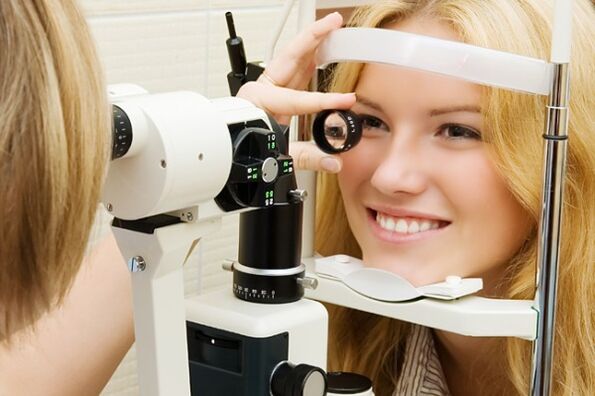
The preparatory stage can be divided into 2 parts.Early preparation begins already 2 weeks before the expected date of correction.You should stop wearing glasses and contacts, as they can change the shape of the cornea.The patient then undergoes diagnostic testing.
During the examination, the thickness of the cornea, the presence of concomitant eye diseases, and possible contraindications are determined.In general, the condition of the eyes and the possibility of correction are assessed.Late preparation is carried out in the ophthalmologist's office immediately before the operation.Anesthetic eye drops are used to relieve pain.Then props are placed in the eyes to prevent the patient from blinking.
Vision correction
Lasts up to 30 minutes.Vision correction surgery is carried out in 3 stages:
- Separation of the corneal flap.A micro incision is made using a laser.A small flap of cornea is moved to the side.
- Restoring the shape of the cornea.Laser exposure continues until the desired parameters are achieved.
- Restoring the corneal flap into place.There are no stitches and healing occurs naturally.
Recovery
On the second day after vision correction surgery, the doctor examines the patient and sends him home.Full recovery occurs after 3 months, but the patient should regain 100% vision the very next day.
If there are no complications, a person after surgery should undergo examination once a month.
Species
There are old and new types of vision correction.Each technique has its pros and cons.
LASIK
This is a traditional surgery to restore vision.During the intervention, the top layer is removed, and the inner layer is exposed to laser treatment.Next, the corneal layer returns to its place.
There are newer types of laser vision correction.The disadvantage of this method is that the individual characteristics of the cornea are not taken into account.
Super LASIK
At their core, the laser vision correction methods LASIK and Super LASIK are identical.The advantage of the latter is that the individual characteristics of the operated patient are taken into account.
Femto LASIK
This method is new and perfect.An ultra-sensitive laser is used, which allows high-frequency operations to be performed with minimal tissue trauma.All parameters are controlled using a computer.
Other vision correction methods are not as accurate as Femto LASIK.The error with this type is 10 microns, and not 20-40 microns as with other types.
Femto Super LASIK
This technique is newer and more accurate than Femto LASIK.The individual characteristics of the patient are taken into account.This is the most expensive method.
Presby LASIK
This technique is used if vision has deteriorated in elderly patients or patients suffer from presbyopia.
PRK
Another name for this method is PRK.The procedure is carried out using an ultraviolet laser, which burns the cornea until the required refractive parameters are achieved.This vision correction is rarely used due to the high risk of complications and pain.
Epi-LASIK
This is the latest technique that restores vision in a short time without pain.During the procedure, the epithelium is removed, so only the upper layers of the cornea are affected.
The advantage of this laser vision correction technique is rapid recovery and a lower likelihood that vision may deteriorate later.Epi-LASIK is most suitable for patients with thin corneas and low levels of myopia.
Complications
Vision correction helps improve the patient's quality of life, but in some cases it can have the opposite effect.Complications immediately after surgery:
- retinal detachment;
- sand in the eyes, sensation of a foreign body;
- photophobia;
- inflammatory process (swelling, redness);
- adjustment from minus to plus;
- insufficient correction of refraction (repeated laser correction is needed);
- retinal hemorrhage.
If surgery to restore vision is performed repeatedly, then not only thinning of the cornea is possible, but also loss of vision.
After laser vision correction, fog in the eye may indicate slow corneal recovery or retinal swelling.Vision may decrease, but all negative consequences should go away after the recovery period.To exclude other serious complications, you need to be examined by an ophthalmologist.
If the procedure is accompanied by complications, then in most cases a repeat operation is required to restore vision.
Long-term consequences of correction:
- disappearance of positive results;
- corneal clouding;
- emergence of new eye diseases.
If your vision worsens after correction, you should immediately visit a doctor.
Severe clouding of the cornea and deterioration of vision after laser correction require repeated intervention.If there are no vital indications, the operation is not repeated.
To prevent vision loss after laser correction, you must follow these recommendations for a month:
- avoid excessive physical activity;
- do not visit swimming pools, saunas and baths;
- stop watching TV and working on the computer;
- do not rub your eyes with dirty hands;
- maintain personal hygiene;
- for preventive purposes, use anti-inflammatory drops;
- avoid eye injuries.
More often, vision declines precisely because of patients’ negligent attitude towards their health.
Is it painful to have surgery?
Laser vision restoration is absolutely painless.Local anesthesia is applied using eye drops.
Vision correction is an effective modern technique that allows you to stop wearing glasses and contacts.The success of the procedure depends on the initial acuity and severity of refractive errors.